
Choose TWO letters, A–E.
Which TWO facts in the sessions on food safety were new information for Nadia and Fergus?
A
the amount of plastic in the ocean
B
the number of diseases caused by contaminated food
C
the amount of food that is wasted
D
the number of people who are obese
E
the result of treating animals with antibiotics
Choose TWO letters, A–E.
Which TWO features of a project aiming to prevent food fraud impressed Fergus?
A
the new technology it used
B
the publicity it received
C
the use of multiple tests on food items
D
the variety of dietary requirements included
E
the way information was made widely accessible
Choose TWO letters, A–E.
Which TWO topics do both students recommend should be included in the course?
A
sustainable fishing
B
targeted nutrition
C
global differences in consumption
D
sustainable agriculture
E
digital technology and food
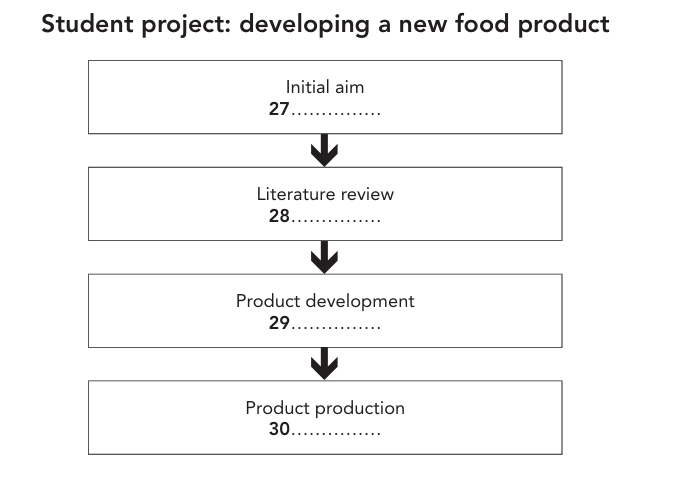
Complete the flow-chart below.
Choose FOUR answers from the box and write the correct letter, A–F, next to Questions 27–30.
A This was challenging but enjoyable.
B This led to some disagreement.
C This was easy to decide on.
D This was helped by the guidelines provided.
E This seemed like an unnecessary stage.
F This involved selecting a new ingredient.
28
29
30
PART 3
You will hear two food science students called Nadia and Fergus talking to their tutor about their course.
你将听到两名食品科学专业的学生纳迪娅和弗格斯与导师谈论他们的课程。
First, you have some time to look at questions 21 to 26.
首先,你有一些时间查看第21至26题。
Now listen carefully and answer questions 21 to 26.
现在请仔细听录音并回答第21至26题。
TUTOR: Thanks for coming along, Nadia and Fergus.
导师:谢谢你们过来,纳迪娅、弗格斯。
So this is a chance for you to give us some feedback about different aspects of your course.
这是一个机会,让你们就课程的不同方面给我们一些反馈。
What would you like to begin with?
你们想从哪里开始说呢?
NADIA: I've enjoyed the sessions on food safety.
纳迪娅:我很喜欢关于食品安全的那些课。
There was some information there that I found really surprising, although some was stuff I knew already, like the rise in rates of obesity.
其中有些信息让我非常惊讶,虽然也有一些是我已经知道的,比如肥胖率上升。
FERGUS: Yeah, that's been in the news a lot.
弗格斯:是啊,这个新闻里报道得很多。
But I hadn't realised that unsafe food causes more than 200 different diseases.
但我之前没有意识到,不安全的食品会导致两百多种不同的疾病。
NADIA: No, I'd no idea it was that many.
纳迪娅:是啊,我也不知道竟然有那么多。
And speaking of diseases, I knew resistance to antibiotics is on the increase, but I didn't know why...
说到疾病,我知道抗生素耐药性正在增加,但我不知道原因……
FERGUS: …that it's partly because when animals are treated with antibiotics then consumed by humans, the antibiotics get into the food chain.
弗格斯:……部分原因是,动物接受抗生素治疗后被人类食用,抗生素就会进入食物链。
I had no idea about that either.
这个我以前也完全不知道。
NADIA: Then the sessions provided a lot of information about plastic pollution from food packaging in the ocean, but I think that most of us were already aware of that.
纳迪娅:然后,那些课还提供了很多关于海洋中食品包装造成塑料污染的信息,但我觉得我们大多数人已经知道这一点了。
FERGUS: Yeah. But I thought we could have done more on how much food is thrown away unnecessarily through fear of it being out of date, that was only mentioned in passing.
弗格斯:是的。不过我觉得,关于人们因为担心食物过期而不必要地丢弃大量食物这一点,我们本可以讲得更多一些;那只是顺带提了一下。
TUTOR: OK, I'll bear that in mind.
导师:好的,我会记住这一点。
What did you think about the sessions from visiting lecturers, Fergus?
弗格斯,你觉得来访讲师的课程怎么样?
FERGUS: For me the most interesting one was about that project to prevent companies giving incorrect information to consumers about food.
弗格斯:对我来说,最有意思的是那个防止公司向消费者提供错误食品信息的项目。
TUTOR: Ah, food fraud, yes.
导师:啊,食品欺诈,是的。
FERGUS: I thought it was really good to address a problem that's faced by so many different groups – people with special religious rules, as well as vegetarians and vegans.
弗格斯:我觉得解决这个问题非常好,因为它影响着很多不同群体,包括有特殊宗教饮食规定的人,以及素食者和纯素食者。
NADIA: And those with allergies.
纳迪娅:还有过敏人群。
FERGUS: Yeah. And another thing, we've had effective ways of analysing DNA for some time now and these can easily be applied to analysing food.
弗格斯:是的。还有一点,我们已经有相当有效的 DNA 分析方法有一段时间了,而且这些方法很容易应用到食品分析中。
But what the researchers succeeded in doing was to ensure that these tests were carried out at different stages in the food's journey from the producer to the consumer.
但研究人员成功做到的是,确保这些检测在食品从生产者到消费者的不同流转阶段都得到实施。
NADIA: So they knew that the food actually came from the place it was supposed to, and had the ingredients it was meant to.
纳迪娅:这样他们就知道食品确实来自它应该来自的地方,并且含有它应该含有的成分。
FERGUS: Exactly. So customers can be confident about what they buy.
弗格斯:没错。这样消费者就能对自己购买的东西有信心。
NADIA: And the researchers had a good system for publicising their findings too.
纳迪娅:研究人员还有一套很好的系统来公布他们的发现。
FERGUS: Well, I thought there were some problems with that, actually.
弗格斯:嗯,实际上我觉得那方面有一些问题。
TUTOR: OK. And do you have any recommendations for new topics that we could include in the course? NADIA: Well, I'm interested in how crop yields can be increased without damaging the environment.
导师:好的。你们有没有建议,可以推荐一些我们能加入课程的新主题?纳迪娅:嗯,我感兴趣的是如何在不破坏环境的情况下提高作物产量。
FERGUS: But we've already done quite a bit on that – but not so much on the seafood industry, where stocks are in danger of being overexploited as a food source unless we can find ways of keeping stocks up.
弗格斯:但我们已经在这方面学了不少;不过关于海鲜产业学得不多。在这个领域,如果我们找不到维持资源量的方法,鱼类等资源就有可能因为作为食物来源而被过度开发。
NADIA: Yes, that'd be a good topic.
纳迪娅:是的,那会是一个不错的主题。
And I'm interested in the idea of a personalised approach to diet, now we have the technology to analyse exactly what individuals need.
我还对个性化饮食方案这个想法感兴趣,因为现在我们有技术可以准确分析每个人需要什么。
FERGUS: That sounds more like a medical topic than food science.
弗格斯:那听起来更像是医学主题,而不是食品科学。
NADIA: OK. What about sessions on the variety of food and eating habits around the world?
纳迪娅:好吧。那关于世界各地食物种类和饮食习惯的课程呢?
That's very relevant nowadays.
这个现在非常相关。
FERGUS: Yes, I think the whole class would be interested in that.
弗格斯:是的,我觉得全班都会对此感兴趣。
NADIA: Then there's technological stuff, things like 3D printing of food and smart packaging.
纳迪娅:还有技术方面的内容,比如食品 3D 打印和智能包装。
FERGUS: Mmm – maybe too specialist.
弗格斯:嗯,也许太专业了。
Before you hear the rest of the discussion, you have some time to look at questions 27-30.
在你听讨论的其余部分之前,你有一些时间查看第27至30题。
Now listen and answer questions 27 to 30.
现在请听录音并回答第27至30题。
TUTOR: Now, I'm particularly interested in your project – the one where you developed a new food product.
导师:现在,我对你们的项目特别感兴趣,就是你们开发一种新食品的那个项目。
So talk me through the stages… first you had to decide on your initial aim.
那你们给我讲讲各个阶段吧……首先,你们必须确定最初的目标。
FERGUS: We decided we wanted to create something people could eat on the go rather than in a restaurant.
弗格斯:我们决定想做一种人们可以边走边吃的东西,而不是在餐厅里吃的东西。
NADIA: Yeah so we chose falafel, which was originally a Middle Eastern snack.
纳迪娅:是的,所以我们选择了 falafel,它原本是一种中东小吃。
FERGUS: We made up our minds about that pretty quickly.
弗格斯:我们很快就决定了这一点。
I know some students found it a lot harder to choose, and wasted a lot of time.
我知道有些学生觉得选择主题难得多,还浪费了很多时间。
NADIA: Then we had to do the literature review.
纳迪娅:然后我们必须做文献综述。
We hadn't done one of these before so the handout with advice for the project was very useful here.
我们以前没有做过这种综述,所以项目建议讲义在这里非常有用。
FERGUS: Yes, especially the advice on how to present the information.
弗格斯:是的,尤其是关于如何呈现信息的建议。
Then product development, actually deciding what we'd use to make the falafel, and for me the interesting thing about that was that we wanted it to be something a bit different from an ordinary falafel.
然后是产品开发,也就是实际决定用什么来做 falafel。对我来说,有意思的是我们希望它和普通的 falafel 有点不同。
NADIA: We really made the right choice when we finally decided to use jackfruit, even though it wasn't something that either of us had ever tasted before.
纳迪娅:当我们最终决定使用 jackfruit 时,确实做出了正确选择,尽管这并不是我们两个人以前尝过的东西。
FERGUS: Yeah, like the name tells you, it's a fruit but actually it's really good in savoury dishes.
弗格斯:是啊,就像名字所说的,它是一种水果,但实际上用在咸味菜肴里非常合适。
The product production, working out how to make the falafel, was harder than I expected because I'd never made them before.
产品制作,也就是弄清楚如何做这种 falafel,比我预想的更难,因为我以前从没做过。
NADIA: It was mostly trial and error.
纳迪娅:这基本上就是反复试错。
We started off with the basic recipe and then experimented and when it went wrong…
我们从基础配方开始,然后进行实验;当它失败的时候……
FERGUS: …which it did a lot of the time…
弗格斯:……而且很多时候确实会失败……
NADIA: …we just moved on and kept adapting it and in the end it turned out fine and we had a lot of fun.
纳迪娅:……我们就继续往下做,不断调整,最后结果很好,而且我们也玩得很开心。
FERGUS: We did!
弗格斯:确实如此!
TUTOR: Thank you. Well, your project was a very good ….
导师:谢谢你们。嗯,你们的项目非常好……
上一题
剑21 Test 2 Part 2下一题
剑21 Test 2 Part 4