随身英语
Perpetual stew: decades in the making 几十年不离火的 “永久炖菜”
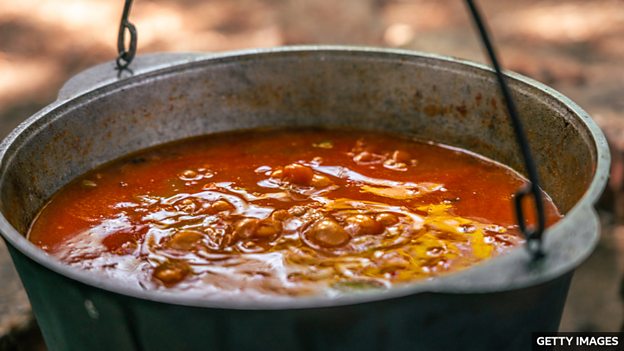
一锅炖了60天的炖菜,你会吃吗?那一盆煲了49年、仍在不断加入新原料的老汤呢?这类经过持续炖制、永不离火、锅不见底的菜品被人们称作 “永久炖菜”。有些人担心它不卫生,而有一些人则认为菜品经炖制后使病原体无法存活,因此可以放心食用。本文介绍 “永久炖菜” 的前世今生。
词汇:cooking 烹饪
What's the oldest meal you've eaten? Maybe you've had leftovers from a few days ago. They probably still tasted good. But what if it wasn't a few days ago, what if you ate a 60-day old stew? Or a 49-year-old beef noodle soup?
Perpetual stew is a dish that is never taken off the heat; it's never finished. As portions are served, new ingredients are put in the pot to replace them. One day's stew becomes the basis of the following days' meals. There have been some famous examples. This year, Annie Rauwerda's 60-day stew became a social media sensation. One Bangkok restaurant claims to have been cooking its beef noodle soup since the 1970s. It has been suggested that perpetual stew was a tradition in Medieval Europe when the effort required to start a fire meant that they were left to burn all day, and a pot of stew was always simmering away on top of it. One New York Times article tells us about a stew in Normandy that was kept cooking for 300 years.
This tradition may date back to the Middle Ages, but thankfully, our understanding of food hygiene has developed since then. In a world where food is often thrown away once it reaches its use-by date, many people have asked how safe perpetual stew can actually be. Experts are divided, some maintain that as long as the stew is kept bubbling away at a temperature too high for pathogens to survive, it should be safe. Others suggest that meat can become dangerous if it's left in the stew for too long. Concerns have also been raised that some vegetables, such as potatoes, or those containing nitrates, could become more toxic the more they are reheated.
Advocates of slow cooking believe that the best food takes time, but even they may be surprised by a months or years-old perpetual stew.
词汇表
leftovers 剩饭,剩菜
stew 炖菜
beef noodle soup 牛肉汤面
dish (一道)菜
take off the heat 将…从灶上挪开,离火
portion (食物的)一份
ingredient 食材,原料
pot 锅
simmer 炖,煨
food hygiene 食品卫生
use-by date 保质期
bubble 沸腾,咕嘟冒泡
pathogen 病原体
nitrate 硝酸盐
toxic 有毒的
reheat 重新加热(食物)
slow cooking 慢炖
测验与练习
1. 阅读课文并回答问题。
1. What makes perpetual stew different to other stews?
2. When did the Bangkok restaurant mentioned start cooking its beef noodle soup?
3. True or False? The article says that perpetual stew started in Normandy.
4. How long was the stew in Normandy cooking for?
5. Which vegetables could get more toxic as they are reheated?
2. 选择意思恰当的单词或词组来完成下列句子。
1. Don't throw extra food away! Saving your _______ reduces food waste.
nitrates portions leftovers pot
2. It can be dangerous to eat food after its _______ .
food hygiene pathogen nitrate use-by date
3. Sauces often taste better if left to _______ for a few hours.
pot grill simmer mix
4. People are worried that some ingredients could become _______, if left too long.
nitrate pathogen hygiene toxic
5. Large _______ sizes can be a cause of obesity.
portion bubble nitrate pathogen
答案
1. 阅读课文并回答问题。
1. WWhat makes perpetual stew different to other stews?
Perpetual stew is never taken off the heat, it is never finished.
2. When did the Bangkok restaurant mentioned start cooking its beef noodle soup?
They started cooking it in the 1970s.
3. True or False? The article says that perpetual stew started in Normandy.
False. The article says that it might have started in Medieval Europe.
4. How long was the stew in Normandy cooking for?
The stew in Normandy was cooking for 300 years.
5. Which vegetables could get more toxic as they are reheated?
The article says that some experts believe that potatoes and vegetables containing nitrates could become more toxic.
2. 选择意思恰当的单词或词组来完成下列句子。
1. Don't throw extra food away! Saving your leftovers reduces food waste.
2. It can be dangerous to eat food after its use-by date.
3. Sauces often taste better if left to simmer for a few hours.
4. People are worried that some ingredients could become toxic if left too long.
5. Large portion sizes can be a cause of obesity.